Case Study: Enterprise tooling
Designing for urgency: simplifying workflow across every role
Problem: Incompatible systems and poor UX create operational friction
As enterprise tech stacks grow, new tools layer over old ones, trapping teams in clunky interfaces and fragmented workflows. During high-stakes incidents, scattered data and poor UX disrupt cross-functional collaboration and inflate time-to-resolution, exactly when speed matters most.
Solution: Design for urgency not happy path
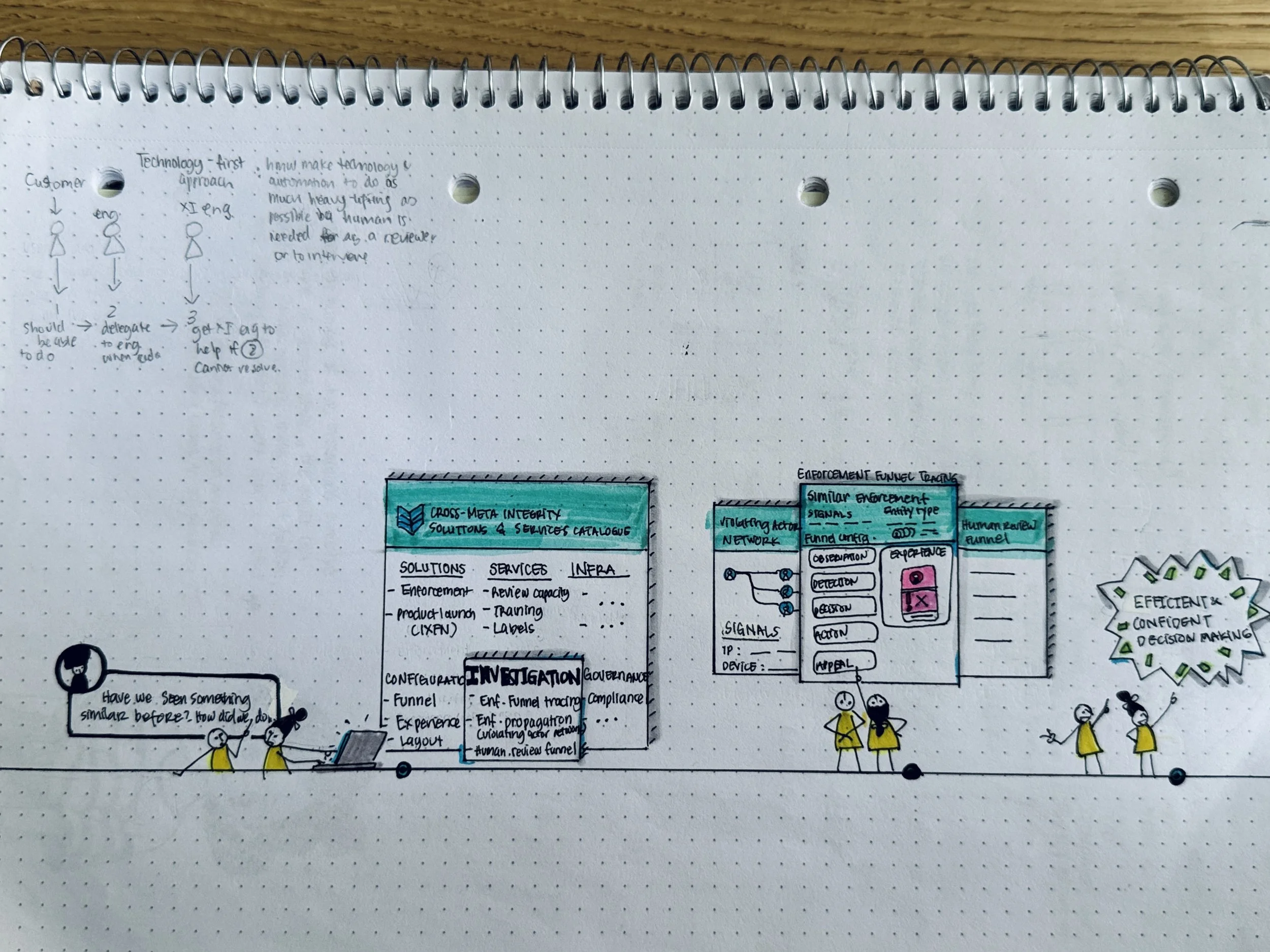
Escalation is business as usual, and usability is the ultimate equaliser in high-stakes environments. By unifying fragmented tools into a single, intuitive interface, we design for shared operational outcomes rather than rigid organisational siloes, eliminate workflow friction, and lower training barriers for technical engineers and non-technical teams alike.
Deliverables: Detection, validation, and action in a single, continuous workflow
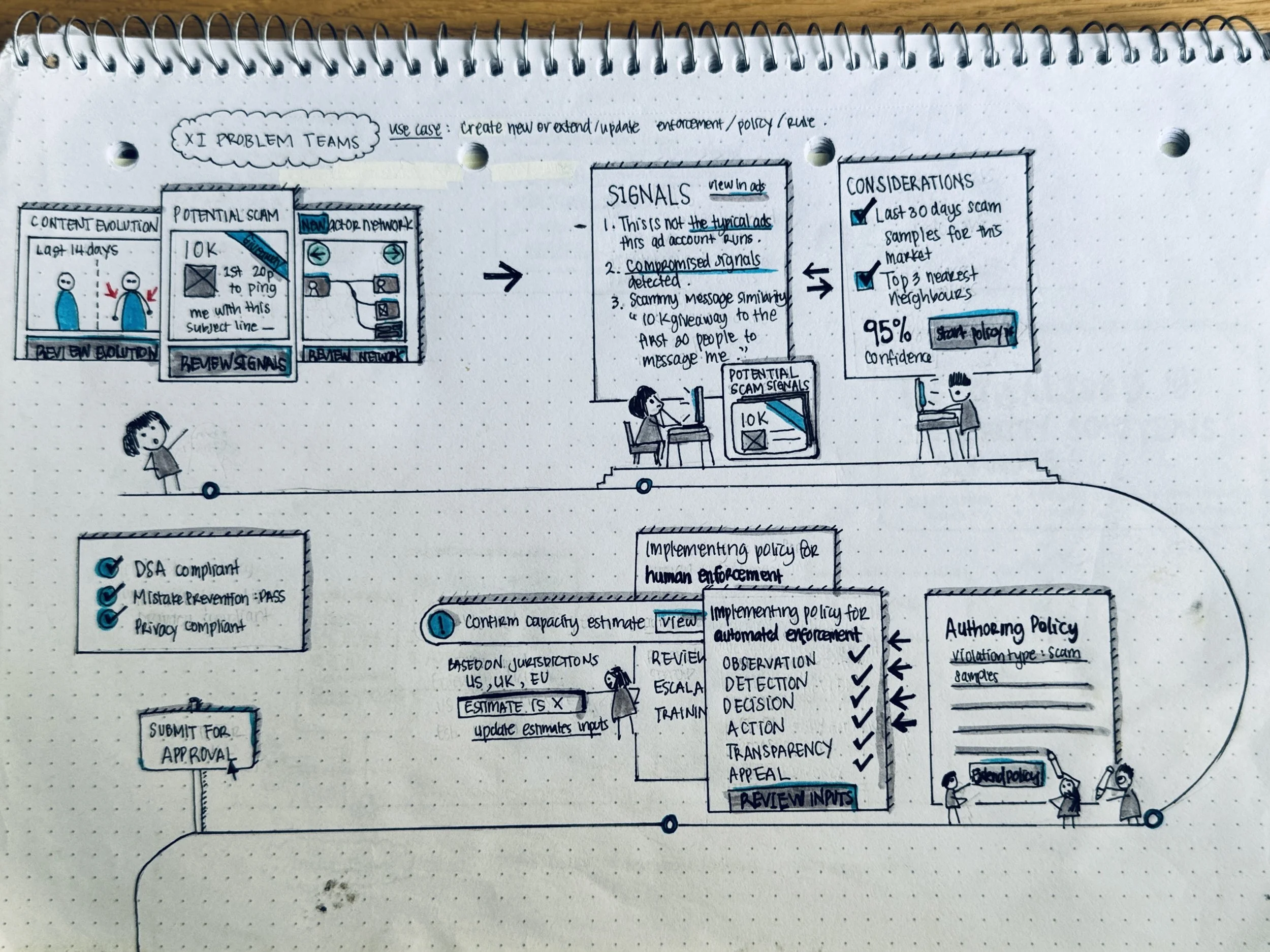
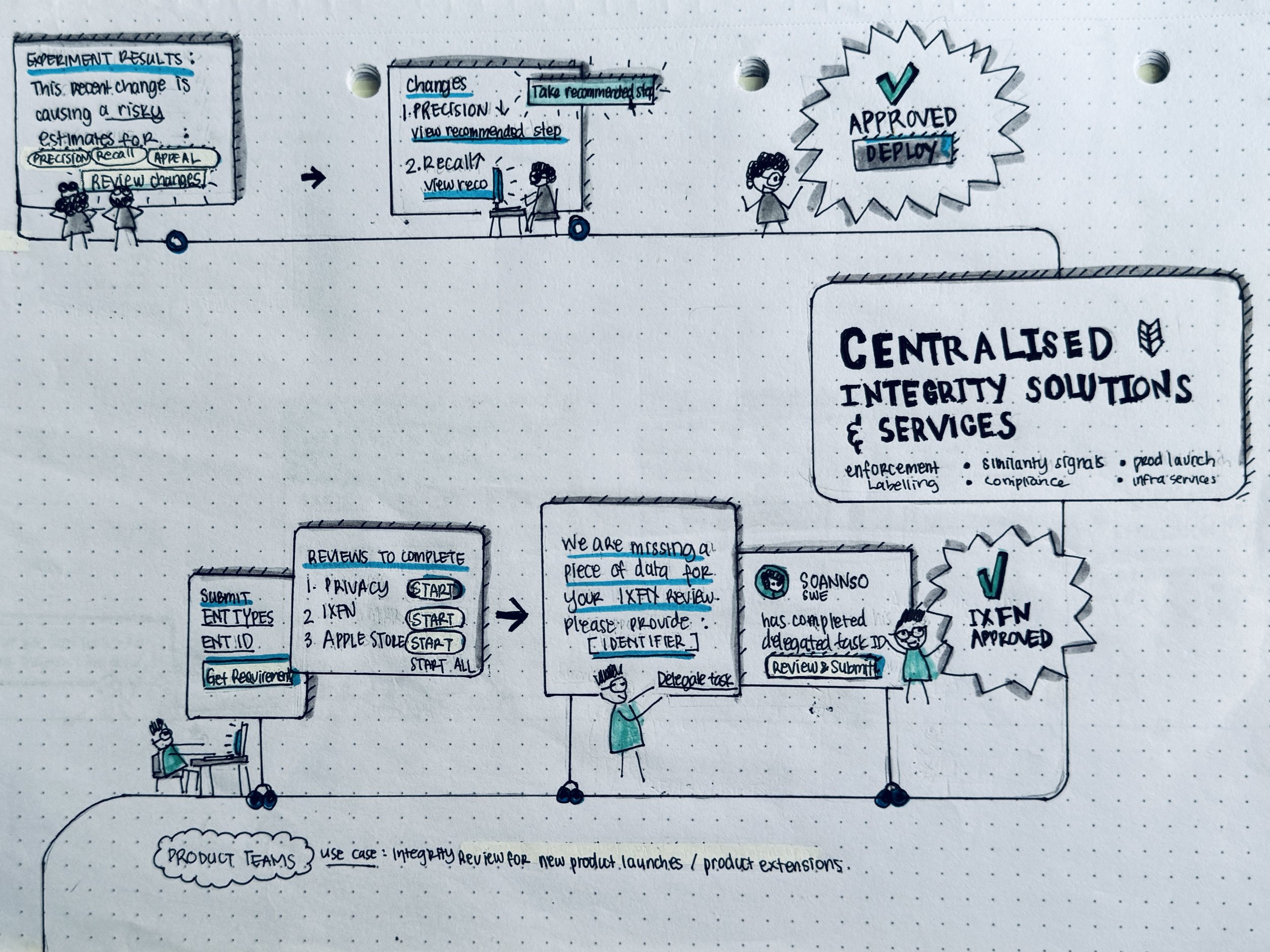
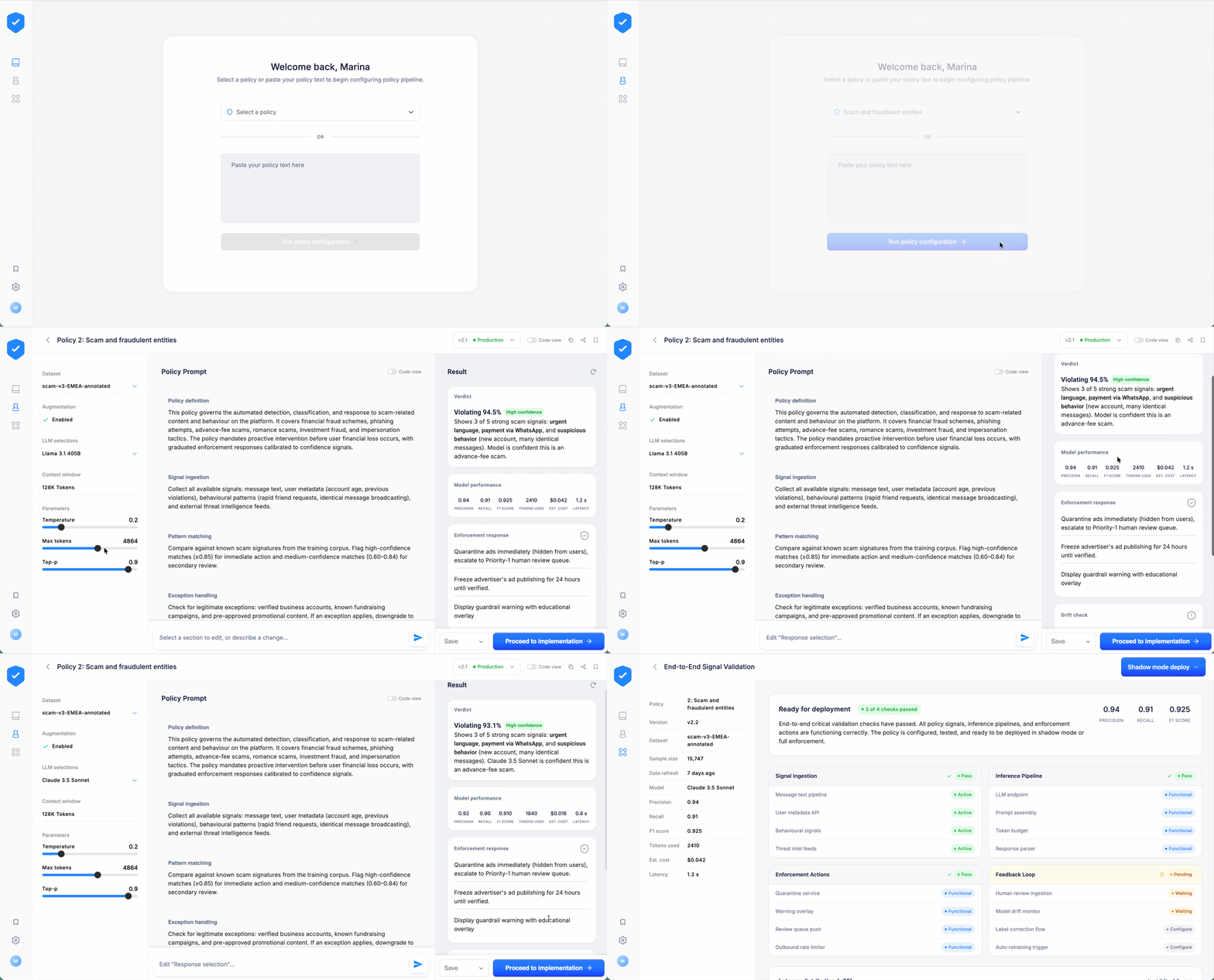
We redesigned the detection and response workflow into a single, unified interface that serves as the entry point for the broader tooling ecosystem. The end-to-end experience spans three connected screens, each designed for a distinct stage of the response process:
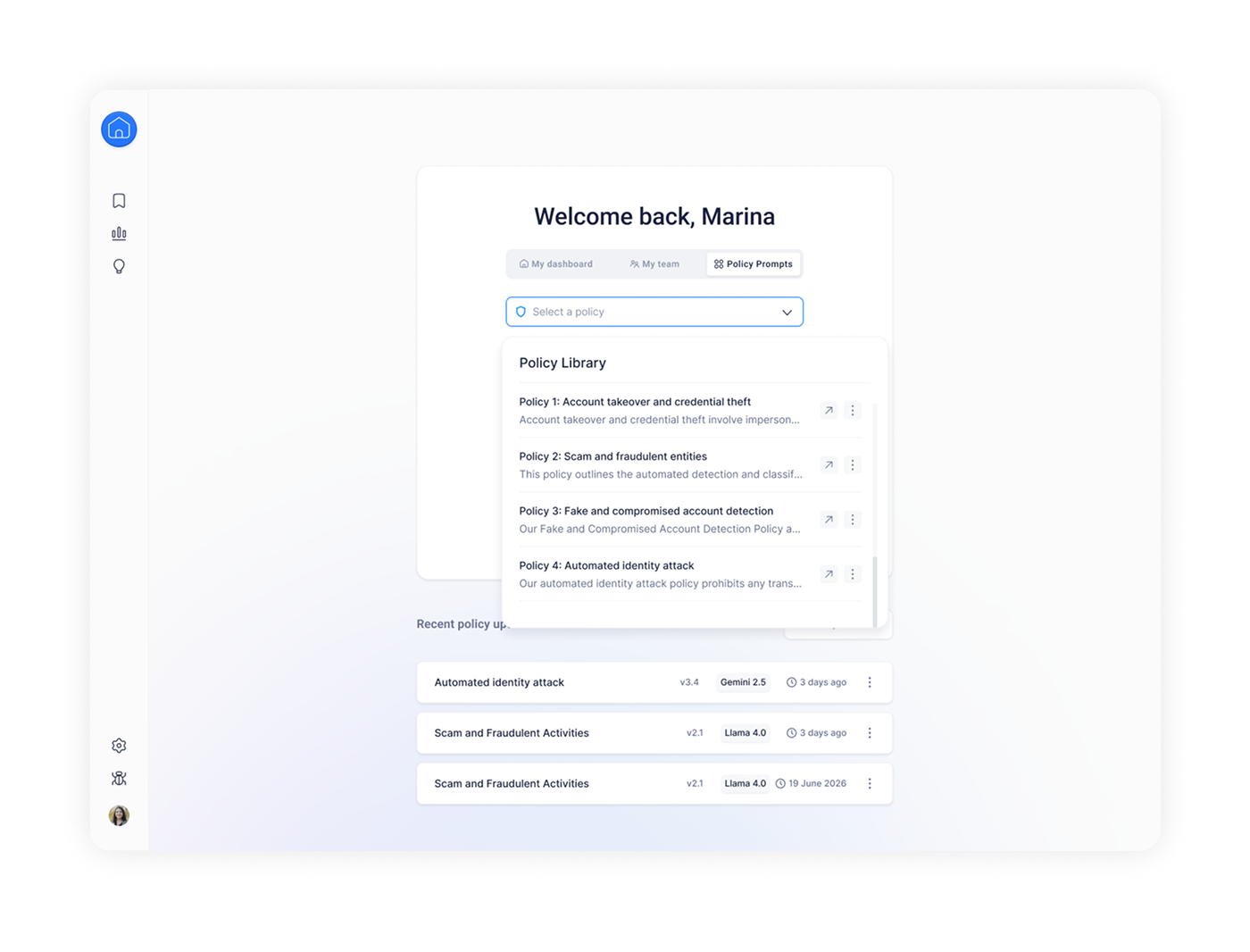
Policy dashboard: A central home base where operators can search, select, and manage every detection policy in one place—eliminating the need to navigate disconnected tools.
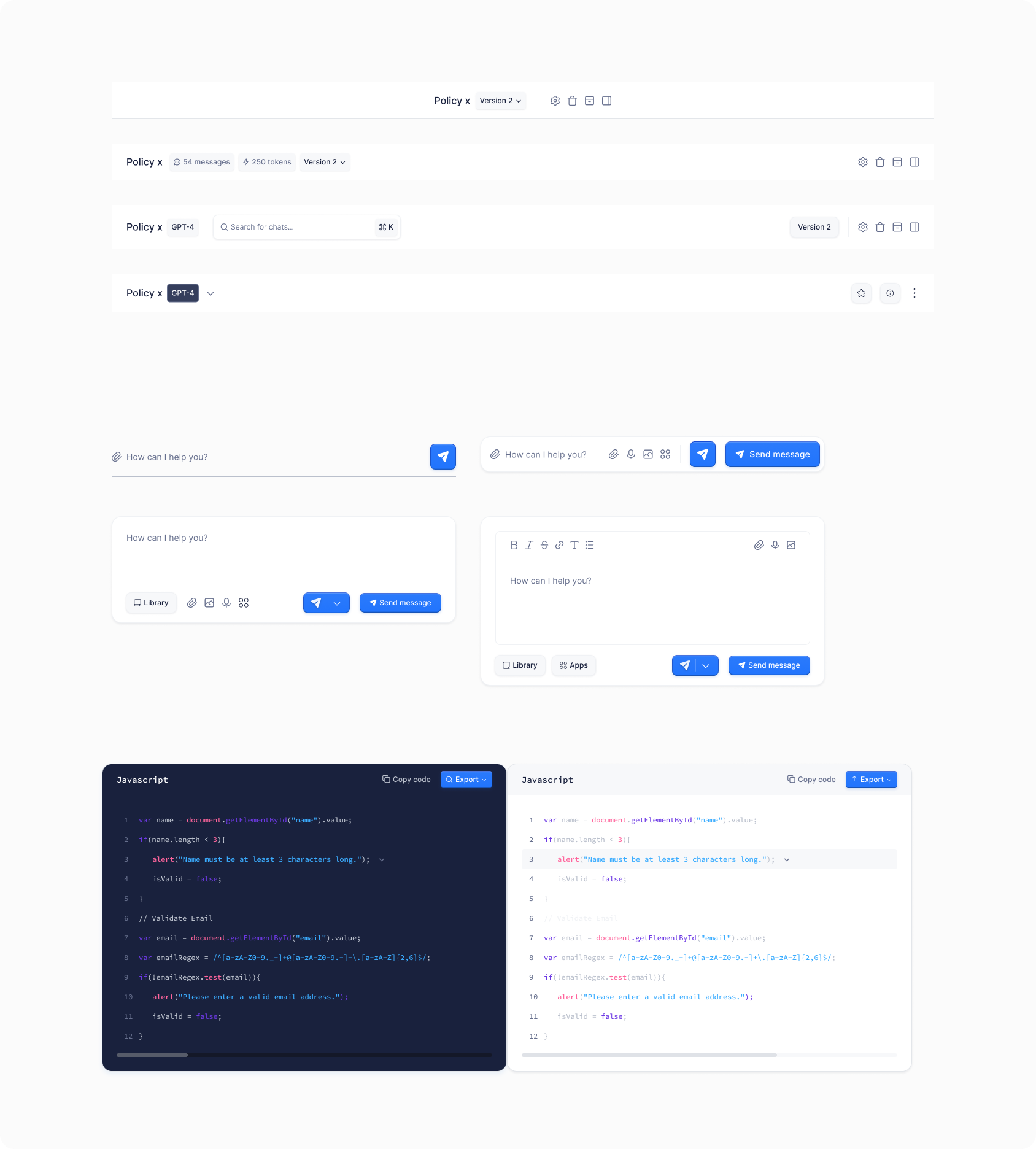
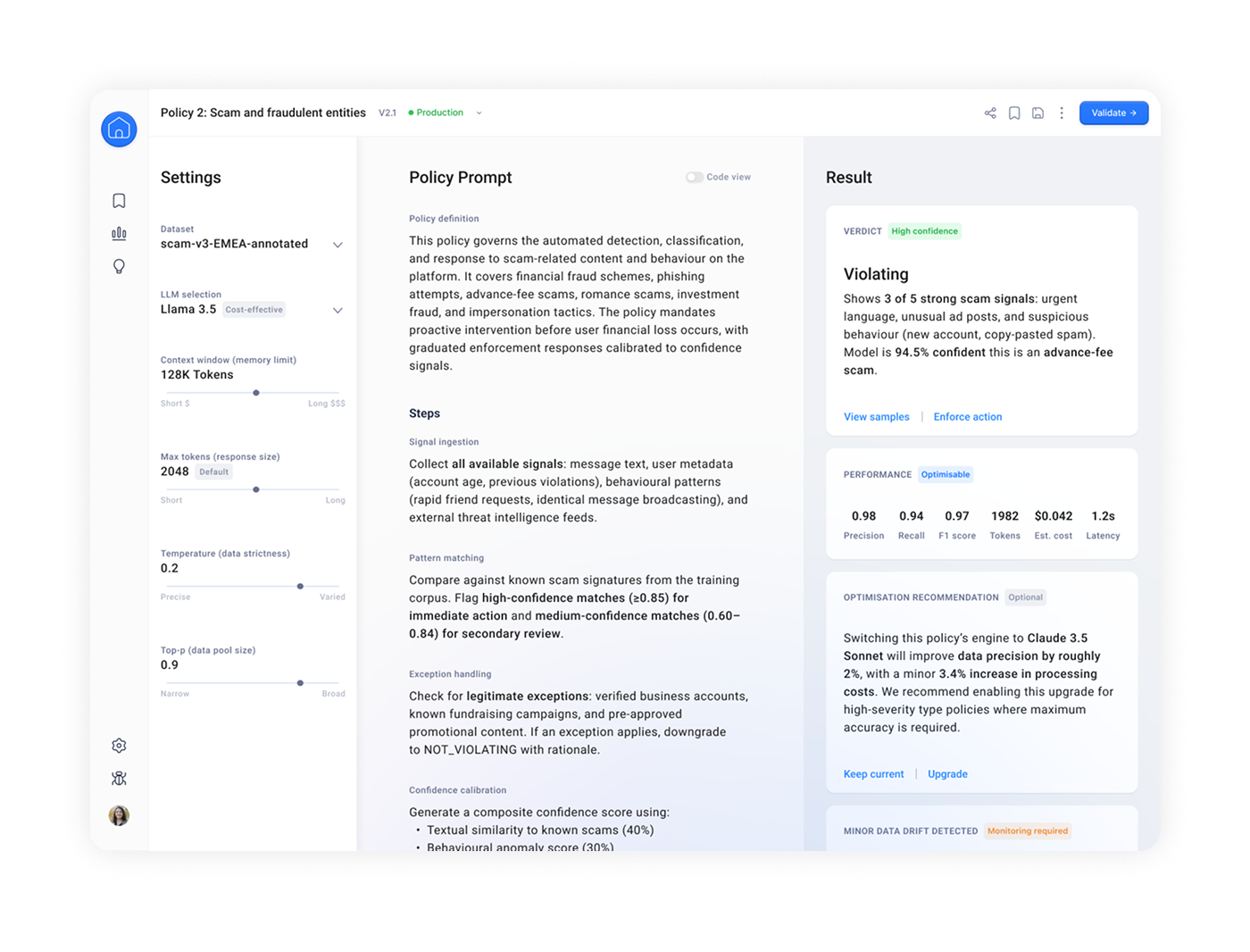
Prompt configurations & results: A real-time view where operators can inspect live verdicts, review model reasoning, and directly adjust or enforce action within a single screen.
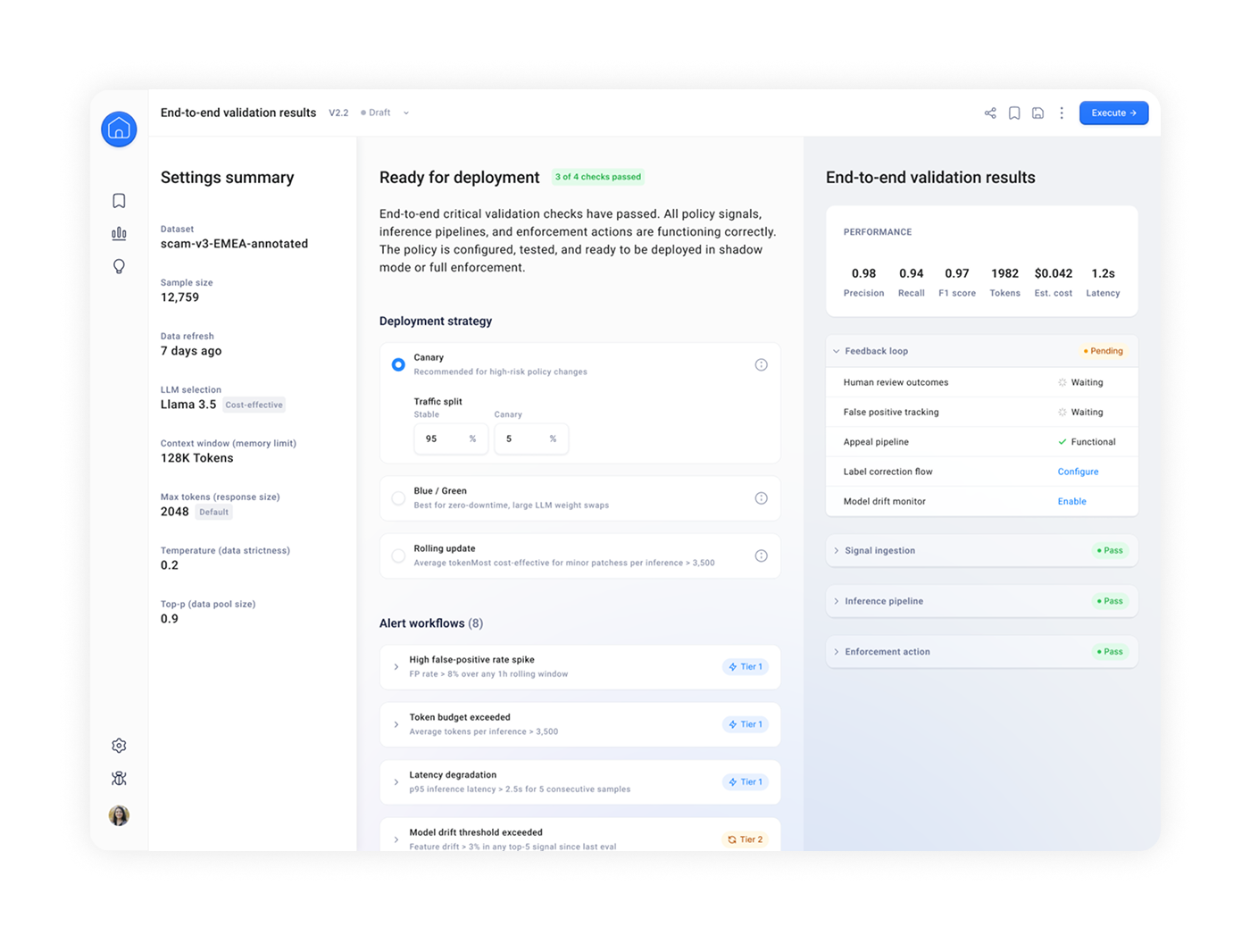
Validation: Built-in validation that tests classifier changes end-to-end before production deployment. This guardrail ensures operators act with confidence rather than guesswork, allowing everyone to act fast and consistently when every second counts.
By bringing detection tuning and deployment into one continuous workflow, these three screens empower first-line operators to act with speed, precision, and safety when every second counts. View prototype
My role
As design lead, my analysis surfaced a critical insight: Escalation is the norm and usability is the equaliser in high-stakes environments. This reframed our strategy from designing for ideal conditions to designing explicitly for urgency, establishing usability as a core operational lever.
Guided by this principle, I aligned a cross-functional team of Research, Data Analytics, Product, Engineering, and Operations around a unified tooling vision. I led the design execution across distributed policy systems, keeping our team in lockstep to ship a zero-to-one product in under three months.
Reflection
Early in the project, we faced internal pushback against building a role-agnostic interface. The prevailing assumption was that non-technical operations teams and technical engineers required fundamentally separate tools due to their different skill sets and permission levels.
However, incident analysis revealed while domain expertise varies, core operational needs during a crisis are identical: rapid context, immediate validation, and friction-free execution.
If I were to do this again, I’d identify the loudest skeptics earlier and bring them in as co-designers from the start, rather than as reviewers after the fact. Their resistance often came from valid concerns, and I strongly believe that if they were engaged early, could have shaped a stronger design rather than surfaced as friction later.
Results: Built in under 3 months, delivering speed and precision
Designed with the same urgency it was built to support, this unified workflow was delivered zero-to-one in less than three months. The impact was immediate across two key areas:
Speed: Consolidating investigation, detection, and response into a single workflow significantly reduced time-to-mitigation during live incidents. We eliminated handoff delays entirely, by allowing teams to tune and deploy classifiers directly in the active workflow,
Precision: Embedding classifier tuning directly into the incident response cycle enabled teams to iterate on detection logic more frequently. Rather than a static, one-time fix, this creates compounding precision gains over time through continuous, real-time tuning.